How to Take Care of a Child’s Milk Teeth?
Summary
- Milk teeth are essential for healthy growth, speech, and permanent tooth alignment.
- Daily brushing, healthy eating, and limiting sugar help prevent cavities.
- Early and regular dental check-ups keep a child’s smile healthy and problem-free.
Many parents assume that milk teeth, also known as primary teeth, are not very important because they eventually fall out. However, these first teeth play a crucial role in a child’s oral health, speech development, nutrition, and the proper alignment of permanent teeth. Neglecting milk teeth can lead to cavities, pain, infections, and future dental problems. Understanding how to care for a child’s milk teeth from an early age can help establish a strong foundation for lifelong oral health, shares Dr. Rimjhim Saran Bhatnagar, one of the most experienced pediatric dentists in Delhi, Gurugram, and NOIDA.
Why Is It Important to Take Care of Milk Teeth?
Although milk teeth are temporary, they perform several essential functions. They help children chew food properly, support clear speech development, maintain space for permanent teeth, and contribute to healthy jaw growth. If milk teeth are lost too early due to decay or injury, neighbouring teeth may shift into the empty space, increasing the risk of crowding and alignment problems when permanent teeth erupt.
Taking good care of primary teeth not only prevents pain and infection but also helps children develop healthy oral hygiene habits that last into adulthood.
Pediatric dentist in South Delhi Dr Rimjhim Saran Bhatnagar says that “Healthy milk teeth are the first step toward a lifetime of healthy smiles.”
Start Oral Care Even Before the First Tooth Appears
Oral hygiene should begin before a baby’s first tooth erupts. Parents should gently wipe the baby’s gums with a clean, soft, damp cloth after feeding. This helps remove milk residue and reduces the growth of harmful bacteria inside the mouth.
Once the first tooth appears, brushing should become part of the daily routine.
Brush Twice Every Day
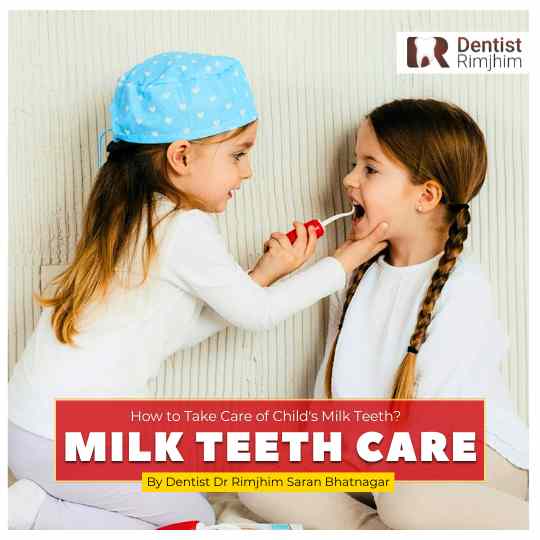
Children’s teeth should be brushed twice daily using a soft-bristled, age-appropriate toothbrush.
For children under three years of age, only a smear of fluoride toothpaste is recommended. From the age of three onwards, a pea-sized amount of fluoride toothpaste is generally sufficient. Parents should supervise brushing until the child develops the coordination to brush effectively on their own.
Avoid Frequent Sugary Foods and Drinks
Frequent consumption of sweets, chocolates, sugary beverages, and sticky snacks increases the risk of tooth decay.
Parents should encourage healthier snack options such as fruits, vegetables, cheese, and yoghurt while limiting sugary treats between meals. Water remains the healthiest drink for maintaining good oral health.
Never Put a Child to Bed with a Milk Bottle
Allowing a child to sleep with a bottle containing milk, juice, or sweetened drinks can cause prolonged exposure of the teeth to sugar, leading to early childhood cavities, commonly known as baby bottle tooth decay.
If a bottle is necessary at bedtime, it should contain only plain water.
Encourage Healthy Eating Habits
A balanced diet rich in calcium, phosphorus, vitamin D, and other essential nutrients supports strong teeth and healthy gums.
Including milk, cheese, yoghurt, leafy vegetables, eggs, and fresh fruits in a child’s diet promotes proper dental development.
Schedule Regular Dental Check-ups
A child’s first dental visit should ideally take place within six months after the first tooth erupts or by their first birthday.
Regular dental check-ups allow early detection of cavities, monitor tooth development, and help children become comfortable visiting the dentist from a young age.
Protect Teeth from Cavities
Professional fluoride treatments and dental sealants may be recommended for children who have a higher risk of developing cavities.
These preventive treatments strengthen tooth enamel and protect the chewing surfaces of molars from decay.
Discourage Harmful Oral Habits
Habits such as prolonged thumb sucking, extended pacifier use, nail biting, or chewing hard objects may affect the development and alignment of teeth if they continue beyond the appropriate age.
Parents should consult a pediatric dentist if these habits persist.
Watch for Early Signs of Dental Problems
Parents should seek dental advice if they notice white or brown spots on the teeth, persistent bad breath, swollen gums, tooth sensitivity, or complaints of tooth pain.
Early treatment often prevents minor problems from progressing into more serious dental conditions.
Milk teeth may be temporary, but their importance cannot be overstated. They support eating, speaking, facial development, and guide permanent teeth into their correct positions. By maintaining good oral hygiene, encouraging healthy eating habits, limiting sugary foods, and scheduling regular dental check-ups, parents can protect their child’s milk teeth and promote excellent oral health for years to come. Early care today lays the foundation for a healthy, confident smile tomorrow.

With an illustrious career spanning nearly two decades, Delhi’s best dentist, the leading dentist who specialises in root canal treatment, dental implants, pediatric dentistry, cosmetic dentistry, dental surgeries, and more, Dr Rimjhim Saran Bhatnagar, is a highly skilled and experienced dental specialist committed to providing exceptional patient care. Her expertise encompasses a comprehensive range of advanced dental procedures, from routine oral care to complex restorative and cosmetic treatments.
Dr. Rimjhim holds a Bachelor of Dental Surgery (BDS) and a Master’s Degree in Oral Medicine, Oral Diagnosis, and Oral Radiology. With over 12 years of experience working in some of the leading Delhi government hospitals, she has earned a reputation as one of the best dentists in Delhi, the best dental surgeons in Delhi, and a top cosmetic dentist in Delhi.… Read More