Am I Brushing Too Hard? Can It Damage My Child’s Teeth?
Summary
- Hard brushing can harm teeth and gums.
- Soft bristles and gentle pressure are recommended.
- Supervised brushing helps children develop better habits.
Brushing is one of the most important habits for maintaining a child’s oral health. Most parents focus on ensuring their children brush regularly, but the way brushing is done is equally important.
While many people assume that brushing harder results in cleaner teeth, excessive force can actually do more harm than good. Understanding the right brushing technique can help protect your child’s teeth and gums while promoting healthy oral development, shares Dr. Rimjhim Saran Bhatnagar, who is an experienced dentist for kids in Delhi, Gurugram, and NOIDA.
Can Brushing Too Hard Damage a Child’s Teeth?
Yes, brushing with excessive force can potentially damage the gums and tooth surfaces over time. Children have smaller mouths and developing teeth, making gentle brushing particularly important. Using too much pressure can irritate the gums, contribute to gum recession, and gradually wear down the protective outer layer of the teeth.
The goal of brushing should be to remove plaque effectively, not to scrub the teeth aggressively.
“Healthy brushing is not about using more force; it is about using the right technique gently and consistently.” Says pediatric dentist in Delhi Dr Rimjhim Saran Bhatnagar.
Excessive Pressure Can Irritate the Gums
Healthy gums should not regularly bleed or feel sore after brushing. Applying too much pressure can irritate delicate gum tissue and may cause redness, tenderness, or bleeding.
Teaching children to use gentle, controlled movements can help protect their gums while still removing plaque effectively.
Hard Brushing May Contribute to Enamel Wear
Tooth enamel is strong, but aggressive brushing combined with an abrasive toothpaste can contribute to surface wear over time. This may make teeth more sensitive, particularly when consuming hot, cold, or sweet foods and drinks.
Using a soft-bristled toothbrush and gentle pressure can help minimise unnecessary wear.
Gum Recession Can Become a Concern
Repeated aggressive brushing may contribute to gum tissue pulling away from the tooth surface. This can expose areas of the tooth that are more sensitive and less protected than enamel-covered surfaces.
Although gum recession can have several causes, teaching children proper brushing habits early can help reduce unnecessary mechanical trauma.
Choose a Soft-Bristled Toothbrush
A soft-bristled, age-appropriate toothbrush is generally suitable for children. The brush should fit comfortably inside the child’s mouth and allow them to reach all tooth surfaces without excessive force.
Parents should replace the toothbrush when the bristles become frayed or approximately every three months, or sooner if needed.
Teach Gentle Circular Movements
Children do not need to scrub their teeth back and forth aggressively. Gentle, small circular movements can effectively clean the teeth and gum line while reducing unnecessary pressure.
Parents should supervise younger children and demonstrate how lightly the toothbrush should be held.
Use the Right Amount of Toothpaste
Using more toothpaste does not make brushing more effective. For children under three years of age, a smear or rice-grain-sized amount of fluoride toothpaste is generally recommended. Children aged three and above can generally use a pea-sized amount.
Parents should supervise younger children to ensure they spit out the toothpaste rather than swallowing it.
Replace Damaged Toothbrushes
Frayed or flattened bristles can indicate that a child is brushing too aggressively. If a toothbrush becomes worn out unusually quickly, parents should check the child’s brushing technique and encourage lighter pressure.
A fresh, soft-bristled toothbrush can provide better cleaning while being gentler on the gums.
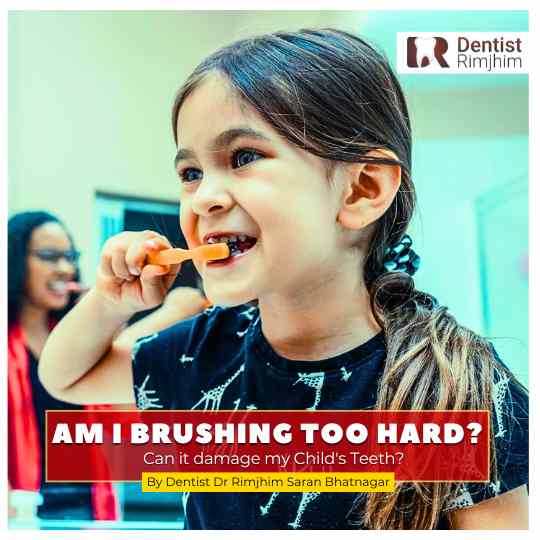
Make Brushing a Supervised Routine
Young children often lack the coordination required to brush every surface effectively. Parents can supervise brushing and, when necessary, help complete the cleaning.
As children grow, they can gradually take greater responsibility while parents continue monitoring their technique.
Brushing twice a day is essential for preventing cavities and maintaining healthy teeth, but brushing harder does not mean brushing better. Excessive pressure can irritate the gums and contribute to unnecessary wear of the tooth surface. Using a soft-bristled toothbrush, the right amount of fluoride toothpaste, and gentle brushing movements can help protect a child’s developing teeth and gums. Parents who are unsure about their child’s brushing technique should consult an experienced dentist for kids in Delhi, Gurugram, and NOIDA for personalised guidance.

With an illustrious career spanning nearly two decades, Delhi’s best dentist, the leading dentist who specialises in root canal treatment, dental implants, pediatric dentistry, cosmetic dentistry, dental surgeries, and more, Dr Rimjhim Saran Bhatnagar, is a highly skilled and experienced dental specialist committed to providing exceptional patient care. Her expertise encompasses a comprehensive range of advanced dental procedures, from routine oral care to complex restorative and cosmetic treatments.
Dr. Rimjhim holds a Bachelor of Dental Surgery (BDS) and a Master’s Degree in Oral Medicine, Oral Diagnosis, and Oral Radiology. With over 12 years of experience working in some of the leading Delhi government hospitals, she has earned a reputation as one of the best dentists in Delhi, the best dental surgeons in Delhi, and a top cosmetic dentist in Delhi.… Read More