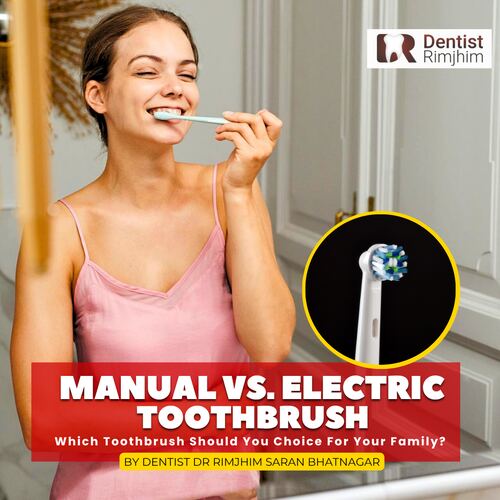
Manual vs Electric Toothbrush: A Dentist’s Family Guide
Summary
- Both manual and electric brushes can clean teeth effectively.
- Electric brushes may make consistent brushing easier.
- Proper technique matters more than the type of brush.
When it comes to your family’s dental health, choosing the right toothbrush is vital to maintaining clean teeth and healthy gums. While both manual and electric toothbrushes serve the same fundamental purpose—removing plaque and keeping your mouth fresh—their features, performance, and costs vary significantly.
If you’ve been wondering whether to stick with the traditional manual brush or upgrade to an electric version, this guide will help you make an informed decision, as shared by Dr Rimjhim Saran Bhatnagar, one of the leading dentists in Munirka and Delhi.
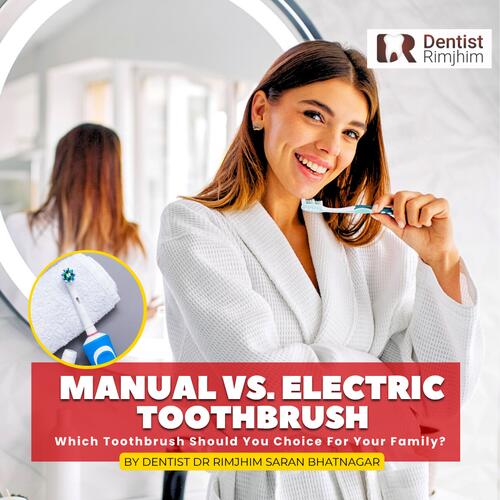
Which Toothbrush Is Better for Your Family?
There is no single toothbrush that is perfect for every family member. Both manual and electric toothbrushes can effectively clean the teeth when used correctly. The better choice depends on factors such as age, brushing technique, comfort, dental needs, and personal preference.
“The best toothbrush is the one your family can use correctly, gently, and consistently every day.”
– Dr Rimjhim Saran Bhatnagar dentist in South Delhi.
Manual Toothbrushes Are Simple and Affordable
Manual toothbrushes are widely available, easy to use, and generally more affordable than electric models. They do not require batteries or charging, making them convenient for home use and travel.
With the right brushing technique, a manual toothbrush can effectively remove plaque from the teeth and along the gumline.
Electric Toothbrushes Offer Automated Movement
Electric toothbrushes use powered movements to clean the teeth. Depending on the model, they may provide oscillating, rotating, or vibrating brush movements.
This can make brushing easier for people who have difficulty maintaining consistent brushing movements with a manual toothbrush.
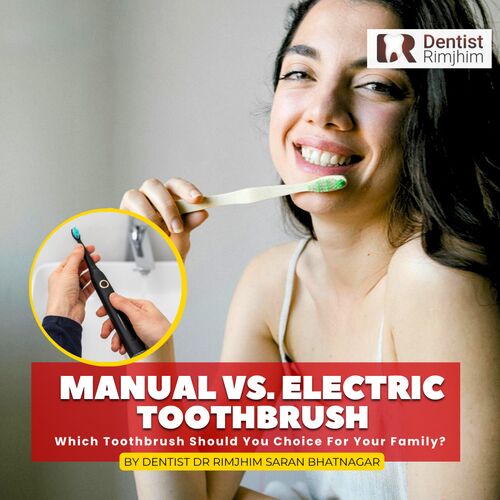
Brushing Technique Still Matters
Having an electric toothbrush does not automatically guarantee better oral hygiene. The way the brush is used remains important.
With either type, the brush should be moved gently across all tooth surfaces, including the front, back, and chewing surfaces. Excessive pressure should be avoided because brushing too aggressively can irritate the gums and contribute to enamel wear.
Electric Brushes Can Help With Consistency
Some electric toothbrushes include features such as built-in timers and pressure sensors. These features can encourage users to brush for an appropriate amount of time and avoid excessive pressure.
For families who struggle with consistent brushing habits, these features may make an electric toothbrush a useful option.
Manual Brushes Work Well for Children
A manual toothbrush can be a practical choice for children, particularly when parents are helping them establish brushing habits. A small, soft-bristled toothbrush designed for the child’s age can make brushing more comfortable.
Parents should supervise younger children and help them brush effectively until they develop the coordination needed to do it independently.
Electric Toothbrushes May Help Some Children
Some children may find electric toothbrushes more engaging because of their movement and built-in features. This can make brushing feel more enjoyable and encourage them to maintain the habit.
However, the toothbrush should always be age-appropriate, and parents should ensure that children use it gently and correctly.
Consider Your Family’s Dental Needs
Certain people may benefit more from an electric toothbrush because of specific difficulties with brushing. Individuals with limited hand movement or difficulty maintaining proper brushing technique may find powered brushing easier.
For people with particular dental or gum concerns, a dentist can recommend the type of toothbrush and brushing technique that best suits their needs.
Replace the Brush Regularly
Regardless of whether your family uses manual or electric toothbrushes, replacing worn brush heads is important. Frayed or damaged bristles are less effective at cleaning the teeth.
Parents should regularly check children’s toothbrushes because young children may chew on the bristles, causing them to wear out faster.
Making the Right Choice for Your Family
The most important factor is not whether a toothbrush is manual or electric, but whether it is used properly and consistently. A soft-bristled toothbrush, gentle brushing technique, regular brushing, and proper cleaning between the teeth are all important parts of maintaining good oral hygiene.
Families can choose based on comfort, budget, age, brushing ability, and individual dental needs. If you are uncertain about which toothbrush is suitable, discussing your family’s oral-health needs with a dentist can help you make a practical choice.
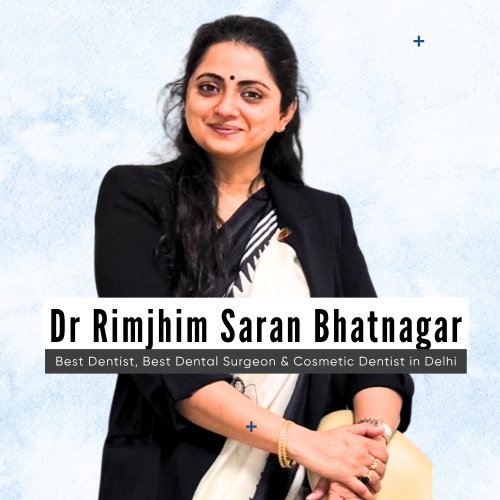
With an illustrious career spanning nearly two decades, Delhi’s best dentist, the leading dentist who specialises in root canal treatment, dental implants, pediatric dentistry, cosmetic dentistry, dental surgeries, and more, Dr Rimjhim Saran Bhatnagar, is a highly skilled and experienced dental specialist committed to providing exceptional patient care. Her expertise encompasses a comprehensive range of advanced dental procedures, from routine oral care to complex restorative and cosmetic treatments.
Dr. Rimjhim holds a Bachelor of Dental Surgery (BDS) and a Master’s Degree in Oral Medicine, Oral Diagnosis, and Oral Radiology. With over 12 years of experience working in some of the leading Delhi government hospitals, she has earned a reputation as one of the best dentists in Delhi, the best dental surgeons in Delhi, and a top cosmetic dentist in Delhi.… Read More