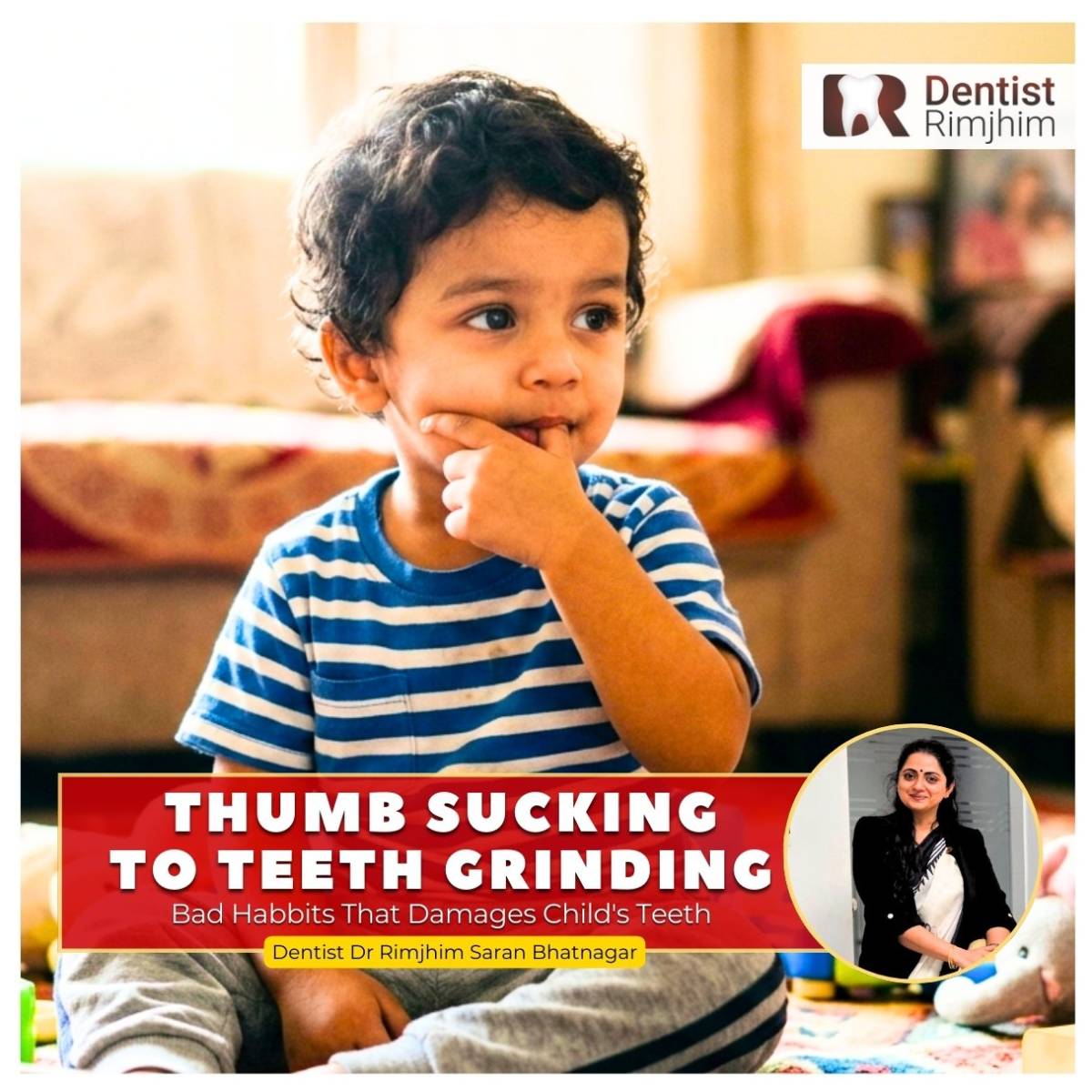
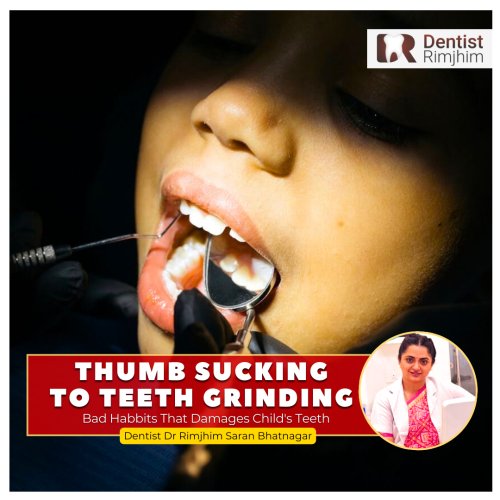
Thumb Sucking to Teeth Grinding: Bad Habits That Damage a Child’s Teeth
The article is Medically Reviewed by Dr Rimjhim Saran Bhatnagar, BDS, MDS, Specialised in Cosmetic Dentistry, Dental Surgery, Paedodontics and Heads the Dentist Rimjhim Multi-Speciality Dental Clinic
Dentist Rimjhim Saran Bhatnagar says, “While many oral habits in children are normal, prolonged behaviors like thumb sucking, teeth grinding, and nail biting can lead to lasting dental issues. Early awareness, guidance, and professional care are key to ensuring healthy teeth and a confident smile.”
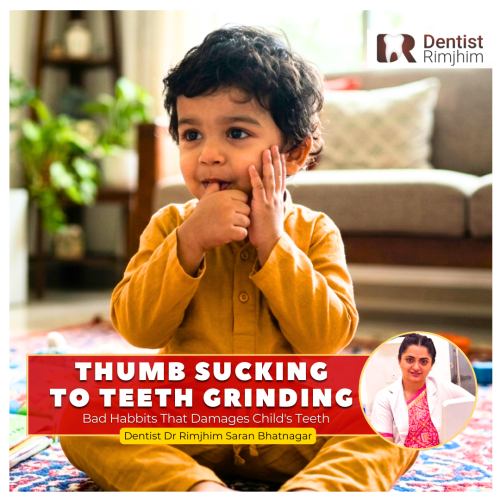
Children often develop oral habits that seem harmless, such as thumb sucking, nail biting, or chewing objects. While these behaviours are common and even comforting, they can become problematic if they persist for too long. Bad oral habits can affect the alignment of teeth, wear down enamel, cause jaw issues, and even impact speech.
Recognising these habits early and addressing them appropriately is essential for maintaining a child’s dental health and ensuring a strong, confident smile, as shared by Dr Reimjhim Saran Bhatnagar, an experienced pediatric dentist in Delhi.
Common Oral Habits That Harm Teeth
Thumb and Finger Sucking
Thumb sucking is a natural reflex in infants, providing comfort and a sense of security. However, if it continues beyond the age of four or five, it can push the upper front teeth forward and alter the bite, potentially leading to misalignment or an open bite. Parents can help by encouraging alternative comfort measures, praising children for reducing the habit, and gradually discouraging sucking without shaming the child.
Prolonged Pacifier Use
Pacifiers can be soothing in infancy, but extended use beyond toddler age may cause similar dental issues as thumb sucking. Gradual weaning from pacifiers after age two is recommended to prevent misalignment of the teeth and changes in jaw structure.
Nail Biting and Chewing Objects
Children may bite nails or chew on pencils, toys, or other objects out of boredom, stress, or curiosity. This can lead to chipped or worn-down teeth, increase the risk of cavities from bacteria, and occasionally cause gum injuries. Encouraging alternative coping mechanisms, such as fidget toys or simple stress-relief activities, can help children break these habits.
Teeth Grinding (Bruxism)
Teeth grinding, often noticed at night, is relatively common among children. It may result from stress, misaligned teeth, or even medical conditions. Over time, grinding can wear down tooth enamel, cause tooth sensitivity, and lead to jaw discomfort or headaches. Pediatric dentists can evaluate the need for protective measures, such as a night guard, to prevent long-term damage.
Tongue Thrusting
Some children habitually push their tongue against their teeth while swallowing or speaking, which can eventually cause misaligned teeth, an open bite, or speech difficulties. Guidance from a dentist, sometimes combined with speech therapy, can help correct this habit effectively.
Supporting Healthy Oral Habits
Early intervention is key to preventing long-term damage. Parents can encourage positive behavior by praising children for reducing habits instead of scolding them. Maintaining a balanced, fibre-rich diet and ensuring proper hydration helps reduce issues like teeth grinding linked to stress or chewing habits. Routine dental visits allow professionals to monitor any signs of damage from persistent habits and suggest corrective measures if needed.
For habits like teeth grinding, nail biting, or tongue thrusting, identifying underlying stressors and teaching coping strategies such as physical activity, relaxation techniques, or simple exercises can also help children overcome these behaviors. In some cases, orthodontic devices or behavior modification programs may be recommended to correct misalignment or jaw problems.
When Should You See a Dentist?
If you notice that your child’s oral habits are persistent or causing visible changes in their teeth, jaw, or bite, it’s important to consult a pediatric dentist. Signs such as misaligned teeth, chipped enamel, jaw pain, frequent headaches, or difficulty chewing should prompt an evaluation. Early intervention ensures effective treatment and prevents long-term dental complications.
Question to Consider: When does thumb sucking or teeth grinding become a concern that requires a dental visit?
Many oral habits in children are normal and self-limiting, but prolonged behaviours like thumb sucking, nail biting, teeth grinding, or tongue thrusting can have lasting effects on dental health. Awareness, early action, and guidance from dental professionals are essential to prevent misalignment, enamel wear, and other complications. By fostering healthy habits, maintaining regular dental check-ups, and providing gentle encouragement, parents can help their children develop strong teeth and a confident smile for years to come.
With an illustrious career spanning nearly two decades, Delhi’s best dentist, the leading dentist who specialises in root canal treatment, dental implants, pediatric dentistry, cosmetic dentistry, dental surgeries, and more, Dr Rimjhim Saran Bhatnagar, is a highly skilled and experienced dental specialist committed to providing exceptional patient care. Her expertise encompasses a comprehensive range of advanced dental procedures, from routine oral care to complex restorative and cosmetic treatments.
Dr. Rimjhim holds a Bachelor of Dental Surgery (BDS) and a Master’s Degree in Oral Medicine, Oral Diagnosis, and Oral Radiology. With over 12 years of experience working in some of the leading Delhi government hospitals, she has earned a reputation as one of the best dentists in Delhi, the best dental surgeons in Delhi, and a top cosmetic dentist in Delhi.… Read More