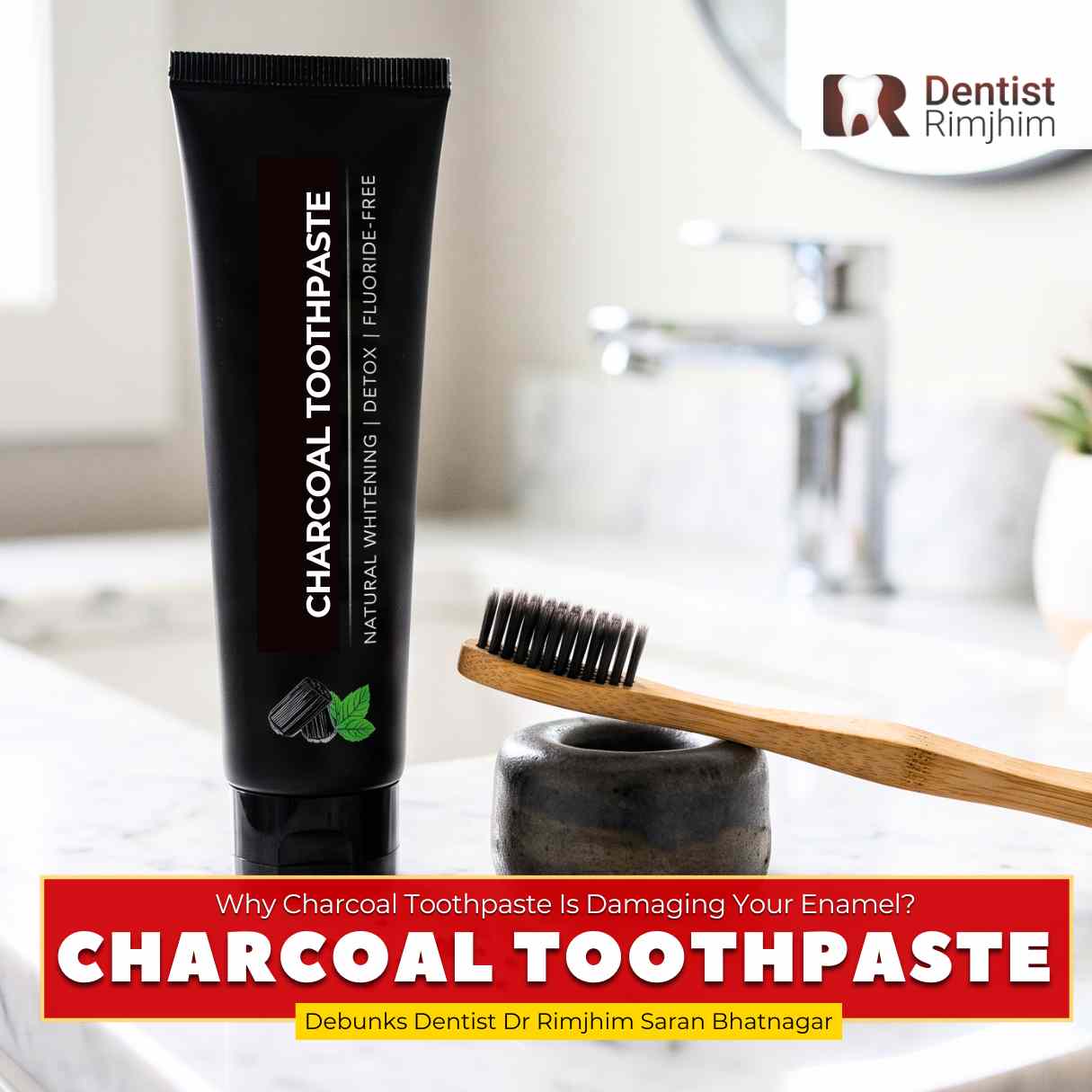
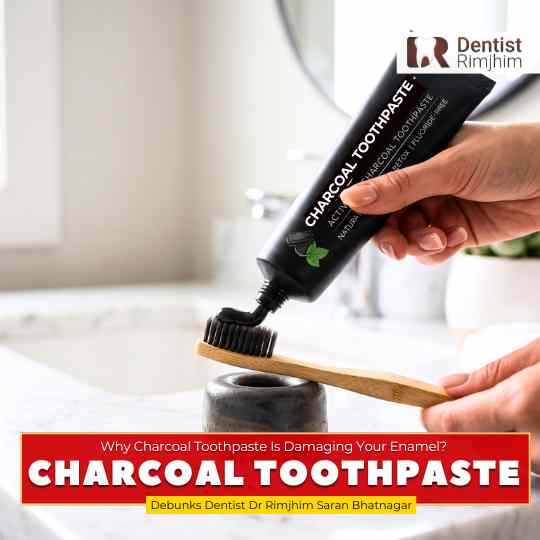
Why Charcoal Toothpaste Is Damaging Your Enamel? Debunks Dentist Rimjhim
Summary
- Charcoal toothpaste can be abrasive.
- Excessive use may contribute to enamel wear.
- Fluoride toothpaste offers better everyday protection.
Charcoal toothpaste has become increasingly popular among people looking for whiter teeth and a brighter smile. Its dark colour and claims of removing stains can make it appear like a powerful natural alternative to conventional toothpaste.
However, the fact that a product feels effective at removing surface stains does not necessarily mean it is safe for everyday use.
Some charcoal toothpastes can be highly abrasive, and frequent or aggressive use may contribute to enamel wear over timeshares Dr Rimjhim Saran Bhatnagar, an experienced dental surgeon in Delhi, Gurugram and NOIDA.
Understanding how charcoal toothpaste affects the teeth can help people make better choices about their daily oral care and avoid unnecessary damage to their enamel.
Why Can Charcoal Toothpaste Harm Your Enamel?
Activated charcoal can have abrasive properties that help scrub away some surface stains. However, excessive abrasiveness can also gradually wear down enamel, particularly when the toothpaste is used frequently or combined with vigorous brushing. Once enamel is lost, it cannot naturally grow back.
“A brighter smile is not worth sacrificing the enamel that protects your teeth.” Says Dr Rimjhim Saran Bhatnagar one of the experienced dentists in Delhi.
Abrasive Particles Can Wear Enamel
Some charcoal toothpastes contain abrasive charcoal particles designed to remove stains from the tooth surface. While mild abrasives are commonly used in toothpaste, excessive abrasion can gradually wear away enamel.
The risk may be greater when a person brushes with too much pressure or uses the product several times a day.
Enamel Does Not Grow Back
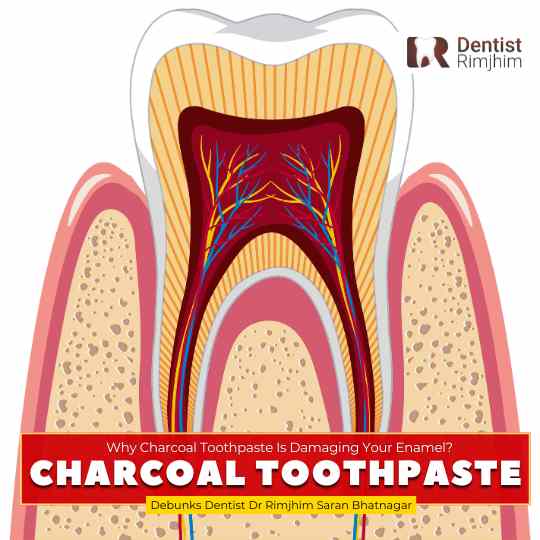
Enamel is the hard outer layer protecting the tooth. Unlike some other tissues in the body, it does not regenerate once it has been permanently worn away.
Progressive enamel loss can expose the underlying dentin, potentially making teeth more sensitive and changing their appearance.
Charcoal Does Not Permanently Whiten Teeth
Charcoal toothpaste may remove some external stains caused by foods, drinks, or tobacco, which can make teeth appear temporarily cleaner. However, it does not change the natural colour of the tooth or provide the same type of whitening as professional or dentist-recommended whitening treatments.
Using an abrasive product repeatedly in an attempt to achieve a whiter smile may therefore cause more harm than benefit.
Tooth Sensitivity Can Increase
As enamel becomes thinner, the underlying dentin may become more exposed. This can make teeth more sensitive to hot, cold, sweet, or acidic foods and beverages.
People who already experience sensitive teeth should be particularly careful about using highly abrasive dental products.
Charcoal May Mask Oral Health Problems
The focus on whitening can sometimes distract people from more important aspects of oral health. Charcoal toothpaste cannot treat cavities, gum disease, or other underlying dental problems.
Regular dental examinations remain important even when teeth appear clean or white.
Aggressive Brushing Makes the Problem Worse
The toothpaste itself is not the only consideration. Brushing too hard can increase mechanical wear on the enamel and gums.
Using a soft-bristled toothbrush, gentle pressure, and controlled movements can help clean the teeth effectively without unnecessarily damaging the tooth surface.
Fluoride Protection Still Matters
Many conventional toothpastes contain fluoride, which helps strengthen enamel and prevent tooth decay. Some charcoal toothpastes may contain fluoride, while others may not.
Choosing an appropriate fluoride toothpaste recommended by a dental professional can provide better protection against cavities while supporting everyday oral hygiene.
Safer Ways to Maintain a Whiter Smile
Good oral hygiene is the foundation of a healthy and attractive smile. Brushing twice a day with a fluoride toothpaste, cleaning between the teeth, limiting staining foods and drinks, and visiting the dentist regularly can help maintain both oral health and appearance.
If teeth have persistent stains or discolouration, a dentist can identify the cause and recommend a suitable whitening option that is less likely to damage the enamel.
Charcoal toothpaste may appear attractive because of its whitening claims, but frequent use of highly abrasive formulations can contribute to enamel wear, particularly when combined with aggressive brushing.
Since enamel cannot regenerate once it is lost, protecting it should be a priority. Rather than relying on charcoal toothpaste for whitening, choosing a fluoride toothpaste and discussing persistent discolouration with a dentist can provide a safer approach to maintaining a healthy, brighter smile.
With an illustrious career spanning nearly two decades, Delhi’s best dentist, the leading dentist who specialises in root canal treatment, dental implants, pediatric dentistry, cosmetic dentistry, dental surgeries, and more, Dr Rimjhim Saran Bhatnagar, is a highly skilled and experienced dental specialist committed to providing exceptional patient care. Her expertise encompasses a comprehensive range of advanced dental procedures, from routine oral care to complex restorative and cosmetic treatments.
Dr. Rimjhim holds a Bachelor of Dental Surgery (BDS) and a Master’s Degree in Oral Medicine, Oral Diagnosis, and Oral Radiology. With over 12 years of experience working in some of the leading Delhi government hospitals, she has earned a reputation as one of the best dentists in Delhi, the best dental surgeons in Delhi, and a top cosmetic dentist in Delhi.… Read More