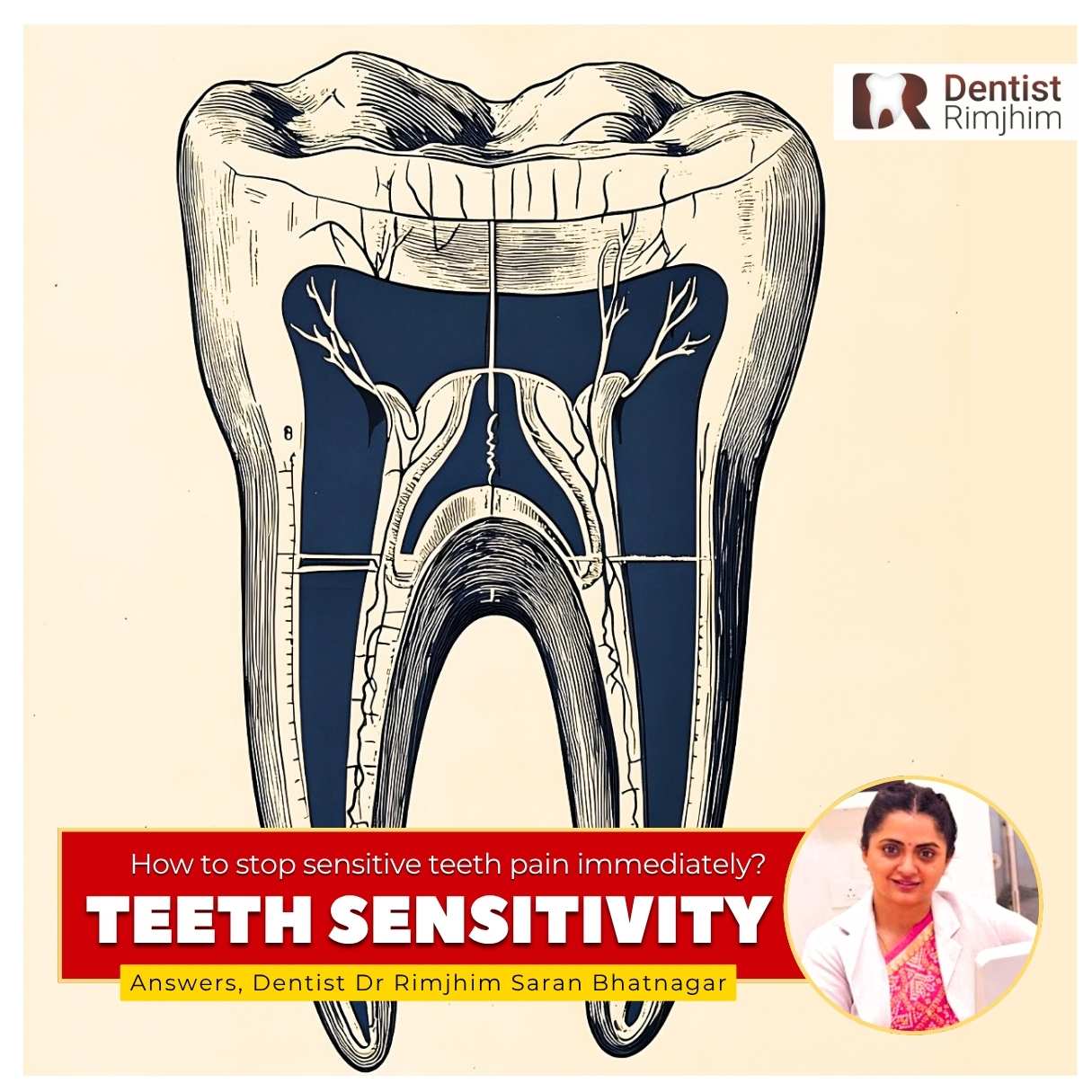
How to Stop Sensitive Teeth Pain Immediately?
Summary
- Use desensitising toothpaste and a soft-bristled toothbrush.
- Avoid very hot, cold, acidic and sugary foods that trigger pain.
- Persistent or severe sensitivity needs a dentist’s evaluation.
Tooth sensitivity can strike without warning—one sip of cold water or a bite of something sweet can send a sharp, sudden pain through your teeth. It’s not just uncomfortable; it can disrupt your daily routine and even make you avoid certain foods altogether. Sensitive teeth usually occur when the protective enamel wears down or gums recede, exposing the underlying dentin.
The good news is that there are ways to ease the pain quickly and manage the problem effectively, shares Dr Rimjhim Saran Bhatnagar, an experienced dentist for tooth sensitivity treatment in Delhi. However, immediate relief should not replace a dental examination, especially if the sensitivity is persistent, severe or affects only one tooth.
What Can You Do to Stop Sensitive Tooth Pain Quickly?
Start by avoiding the foods and drinks that trigger your sensitivity. If cold water, ice cream or chilled beverages cause pain, choose room-temperature alternatives for a while. Similarly, reduce very hot, acidic or sugary foods if they make the discomfort worse.
Using a soft-bristled toothbrush and brushing gently can also help prevent further irritation. Brushing with excessive force can contribute to enamel wear and gum recession, increasing the exposure of sensitive areas.
A desensitising toothpaste formulated for sensitive teeth may also help reduce discomfort. These toothpastes contain ingredients that help block the pathways through the dentin that transmit sensations toward the nerve. While some people notice improvement relatively quickly, consistent use is generally needed for better results.
“Quick relief can ease tooth sensitivity, but treating the underlying cause is the key to preventing recurring pain.” Says Dr Rimjhim Saran Bhatnagar, dentist for preventive dental treatment in Delhi.
Common Causes of Tooth Sensitivity
Tooth sensitivity commonly occurs when dentin becomes exposed. This can happen when enamel wears down or the gums recede and expose the roots of the teeth.
Aggressive brushing, gum disease, enamel erosion from acidic foods and beverages, teeth grinding and tooth decay can all contribute to sensitivity. Some people may also experience temporary sensitivity after dental procedures such as teeth whitening.
Because the causes can vary, treating sensitivity effectively requires identifying what is triggering it.
The Role of Desensitising Toothpaste
Desensitising toothpaste can be useful for managing mild or recurring sensitivity. It works by reducing the transmission of sensations through exposed dentin, helping make the teeth less reactive to hot, cold or sweet foods.
For the best results, use it regularly rather than only when pain occurs. Your dentist can also recommend a suitable toothpaste depending on the condition of your teeth and gums.
When Sensitivity Needs Dental Attention
Not all tooth sensitivity is simply a result of enamel wear. Persistent or intense sensitivity can sometimes indicate an underlying dental problem such as tooth decay, a cracked tooth, gum disease or an exposed tooth root.
If the pain continues even after the hot or cold food or drink is removed, occurs repeatedly in one tooth, or is accompanied by swelling, pain while biting or visible damage, it is important to consult a dentist.
A dental examination can help determine whether the sensitivity can be managed with preventive care or requires professional treatment.
Simple Ways to Prevent Tooth Sensitivity
Maintaining good oral hygiene is one of the most effective ways to reduce the risk of sensitivity. Brush twice daily using a soft-bristled toothbrush and gentle pressure. Floss regularly to maintain healthy gums and remove plaque from areas a toothbrush cannot reach.
Limiting frequent exposure to acidic foods and beverages can also protect enamel. After consuming acidic foods or drinks, rinse your mouth with water and wait before brushing to avoid damaging softened enamel.
Regular dental check-ups can further help identify cavities, gum recession, enamel erosion and other problems before they become more serious.
Take Tooth Sensitivity Seriously
Occasional sensitivity may improve with simple changes to your oral-care routine, but recurring pain should not be ignored. Quick relief can make you more comfortable, but treating the underlying cause is what helps prevent the problem from returning.
If sensitive teeth are affecting your ability to eat, drink or brush comfortably, consult a dentist for an evaluation. With the right diagnosis and treatment, tooth sensitivity can often be controlled effectively and your everyday comfort restored.

With an illustrious career spanning nearly two decades, Delhi’s best dentist, the leading dentist who specialises in root canal treatment, dental implants, pediatric dentistry, cosmetic dentistry, dental surgeries, and more, Dr Rimjhim Saran Bhatnagar, is a highly skilled and experienced dental specialist committed to providing exceptional patient care. Her expertise encompasses a comprehensive range of advanced dental procedures, from routine oral care to complex restorative and cosmetic treatments.
Dr. Rimjhim holds a Bachelor of Dental Surgery (BDS) and a Master’s Degree in Oral Medicine, Oral Diagnosis, and Oral Radiology. With over 12 years of experience working in some of the leading Delhi government hospitals, she has earned a reputation as one of the best dentists in Delhi, the best dental surgeons in Delhi, and a top cosmetic dentist in Delhi.… Read More